Category Archives: JPND News

Researchers studying neurodegenerative disease can now look up cohort studies and make connections through a new online database. The JPND Global Cohort Portal, created by the EU Joint Programme – Neurodegenerative Disease Research (JPND), is a searchable online database of neurodegenerative disease cohort studies.


Long-term studies which follow large groups of people over time – known as longitudinal cohort studies – are a rich, but currently under-used, resource. Finding and contacting relevant cohorts can be a difficult and time-consuming task for researchers.


The portal aims to overcome this challenge by allowing users to search for cohorts that can be used for neurodegeneration research around the world, based on a summary of and the data collected. The cohort contact details are available on the portal, giving researchers the opportunity to make new connections.


Currently including 110 cohorts, the tool will continue to grow as new cohorts are discovered and added. The aim of the portal is to encourage information exchange and new collaborations within the neurodegenerative disease community, to support scientific progress.


After exploring the database, Dag Aarsland, Professor of Old Age Psychiatry at King’s College London, said: “I was pleased to see that the JPND Global Cohort Portal offers a broad and overarching view of cohorts that have been funded in countries across Europe and beyond. In fact, after just a few minutes of exploring the JPND Portal, I identified a number of cohorts that I hadn’t heard of before, which may be useful in my research.” Read the full interview with Professor Aarsland on the Portal.


Neurodegenerative disease-specific and general population cohorts, related to neurodegenerative disease research, are both included. To be considered relevant, they must be cohorts that were set up to follow a range of health or social factors as a population ages, or cohorts looking at other chronic diseases but using measures of risk relevant to neurodegenerative disease, for example metabolic or cardiovascular factors.


To be included, neurodegenerative disease-specific cohorts must have more than 200 participants, unless they are classed as rare conditions. General population cohorts must include over 1,000 participants.


To allow the database to grow and evolve, an online entry form is available for principal investigators to submit their cohort for inclusion after checks. Cohorts can also be updated to reflect changes, such as when new waves of data are available or upon the introduction of a new test.
A new, publicly accessible website is cataloguing the range of animal and cellular models currently available for the study of Parkinson’s disease (PD) and providing a forum for scientists to discuss the limitations of these models and how they might be improved. The JPND database of Experimental Models for Parkinson’s disease, developed in cooperation with the Italian Ministry of Education, Universities and Research (MIUR), aims to build an online network of scientists working in the field to more rapidly establish community consensus around currently available models. By bringing together expertise from across national and disciplinary boundaries, JPND seeks to accelerate progress toward the next generation of experimental models, which could ultimately contribute to a deeper understanding of the causes of PD and the development of potential disease-modifying therapies.


Why experimental models for Parkinson’s?

Experimental models mimic the processes thought to be at play in human patients and allow researchers to assess possible treatments before moving into clinical trials. They span both in vivo models – including mammals (e.g., mice) and non-mammals (e.g., zebrafish, Drosophila) — and in vitro models (e.g., “brain in a dish”). As such, they are a critical tool for scientists studying the origins and pathways of PD. Yet to date the available models have shown limited capabilities to translate the wealth of information recently generated by preclinical research into new treatments, diagnostics and preventive strategies. A 2014 report published by the JPND Action Group on Experimental Models identified some of the most pressing limitations facing current models for PD, including lack of behavioral analysis relevant to humans, lack of models for symptoms that do not respond to dopaminergic treatment, and lack of models with progressive neuronal loss associated to alpha-synuclein deposits and neuroinflammatory processes. With this web forum, JPND aims to address and expand on this analysis and set the basis for the development of innovative new strategies that can be applied in the field.


How does it work?

Sign up for free to access an overview of the different models and to join the conversation. The database currently provides detailed information on in-vivo mammalian models, and will soon be expanded to include non-mammalian in-vivo models as well as in vitro models. You may comment on specific individual models or categories of models and respond to comments already left by other users.  It is expected to be expanded over time, with other neurodegenerative diseases covered by JPND added progressively. Additional models will also be added thanks to your contribution; your participation will help to build an open source of information available to everyone.


Why join the forum?

  • Discuss the limitations and potential improvements of current models with other scientists
  • Get the latest updates on the state-of-the-art of experimental models for PD
  • Participate in real-time discussion


Join us at: https://www.neurodegenerationresearch.eu/models-for-parkinsons-disease/


For more information, please contact [email protected]


The Joint Programming initiative on Neurodegenerative Diseases research aims to begin a dialogue with companies active in the neurodegenerative disease field, including imaging, diagnostics, IT, medical devices and more. This dialogue will foster collaboration and help JPND orient its research in the coming years.

To this end, JPND is organising a workshop on Industry-Academia Collaboration in Neurodegenerative Research. The full agenda of the workshop can be found here. It will be held on 12 October as part of the Meet in Italy for Life Sciences event, which will take place in Turin.

This workshop is free. To register, please send an email to [email protected].

Many longitudinal cohort studies exist across Europe that hold the kind of data that would help researchers better understand the development and progression of neurodegenerative diseases. To help researchers get the most out of this cohort data, JPND funded ten international, expert Working Groups beginning in 2014. The objective of this initiative was to develop recommendations and guidelines for maximizing the benefits of research using longitudinal cohorts.

JPND has compiled the results of the Working Groups’ reports in a paper published in Frontiers in Neuroscience.

JPND continues to emphasize the importance of cohort studies and is committed to helping researchers access cohort data by preparing the launch of a user-friendly Global Cohort Portal entirely dedicated to neurodegenerative diseases, to go live in autumn, 2017.

For Public to Public Partnerships (P2Ps), impact assessment is an important objective, as underscored by the attendees of the Annual Joint Programming Conference of 2016. To that end, adequate Monitoring and Evaluation processes must be developed and implemented.

JPND’s 2016-2017 recalibration of its monitoring and evaluation framework in order to improve impact assessment has been featured as a case study on the ERA-LEARN 2020 website. Citing JPND as a good-practice example, the case study lays out the main sources, processes, challenges and key benefits of the recalibration process, as well as the underlying rationales for refining its impact assessment capabilities. To access the full case study, click here.

The EU Joint Programme – Neurodegenerative Disease Research (JPND), will host a half-day workshop led by the Italian Ministry of Education, Universities and Research (MIUR) from 9 a.m. to 1 p.m. on October 12, 2017, focused on fostering cooperation in neurodegenerative disease research. The workshop will take place as part of Meet In Italy for Life Sciences, a three-day event in Turin, Italy. Registration for the meeting, which is free, is now open.

JPND has already engaged with pharmaceutical companies over the past several years and now wants to better understand other industry sectors such as diagnostic, IT, medical devices, care and imaging as well as small and medium enterprises.

With this in mind, the primary goal of the workshop is to begin a two-way conversation with industries active in the neurodegenerative disease field in order to:

  • ascertain their priorities
  • get their views on JPND’s current priorities
  • seek consensus on industry’s requirements for collaborative activity with the academic sector and other stakeholders (e.g., funders, regulators)

The outputs of the meeting will help to foster cooperation between academia and industry in research on neurodegenerative diseases, and will serve to orient JPND’s research activity and investment over the coming decade.

A detailed agenda of the workshop will be available shortly.

For more information on the program of the workshop, please contact Valeria Cardia at [email protected] or by phone at +39 06 5849 7333.

To register for the workshop please send an e-mail to [email protected]

Registration is limited, and participants will be selected based on their area of expertise and location in order to ensure geographically diverse representation at the event.


Introducing the first global database of cohorts for neurodegenerative diseases

To promote the use and connection of cohort studies, the Joint Programme for Neurodegenerative Disease Research (JPND) has developed a new online gateway to longitudinal cohorts suitable for neurodegenerative disease (ND) research.
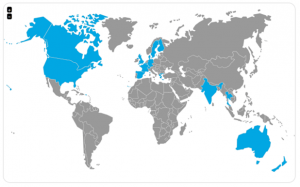
The JPND Global Cohort Portal is a searchable database of cohort studies from countries around the world. By providing users with an overview of and contact details for each cohort, this publicly available resource aims to facilitate information exchange and new collaborations, to help promote a greater volume of ND research, increased efficiency and ultimately greater scientific impact. The Portal is expected to debut on the JPND website in Autumn 2017 and will continue to grow as new cohorts are added.

How does it work?
The Portal spans both disease-focused and general population studies, providing a high-level overview of each cohort, including the types of data collected. Once the most relevant cohorts are identified, Portal users may navigate directly to the individual cohort website or contact the principal investigator for further information and guidance on how to use the cohort as a resource.

Why cohorts?
Longitudinal cohort studies allow researchers to collect data on populations over time in order to establish high-quality correlations and tease out new clues regarding the determinants and risk factors of disease. As such, cohorts are among the most important tools for current and future research on neurodegeneration.

As outlined in a 2013 JPND report linking and comparing studies could lead to important insights and statistically more powerful conclusions. Yet detailed information on cohort studies is often difficult to find, and identifying and connecting with the right contacts from each cohort can pose additional challenges. The JPND Global Cohort Portal was developed to meet these needs.

How can I get involved?
The JPND Global Cohort Portal will continue to expand. If you have information regarding a relevant cohort study that could be included, we encourage you to get in touch. For this and any other questions, emails should be directed to: [email protected].

The Network of Centres of Excellence in Neurodegeneration (CoEN) is now accepting applications to its 2017 Pathfinder III call.

CoEN is an international initiative involving nine research funders in Europe and Canada that aims to build productive collaborative research activity in neurodegeneration research across borders. CoEN is aligned with JPND although it operates as an independent entity.

With this latest call, CoEN seeks to address the need for innovative research to underpin new approaches to therapeutic intervention. It is expected that teams will combine the research strengths across centres of excellence (CoEs) in at least two partner countries to provide a true value-added collaborative effort that will advance our approach to neurodegeneration research.

This call for Pathfinder projects is being launched by seven of the nine research funders that are members of CoEN:

  • Agence Nationale de la Recherche, ANR (France)
  • Canadian Institutes of Health Research, CIHR (Canada)
  • Deutsches Zentrum für Neurodegenerative Erkrankungen, DZNE (Germany)
  • Instituto de Salud Carlos III, ISCIII (Spain)
  • Ministero della Salute, MDS (Italy)
  • Medical Research Council, MRC (UK)
  • Science Foundation Ireland, SFI (Republic of Ireland)

These seven agencies are contributing approximately €5.5M to fund awards made under the call involving their national CoEs.

To learn more about the call and to apply, visit the CoEN call page.

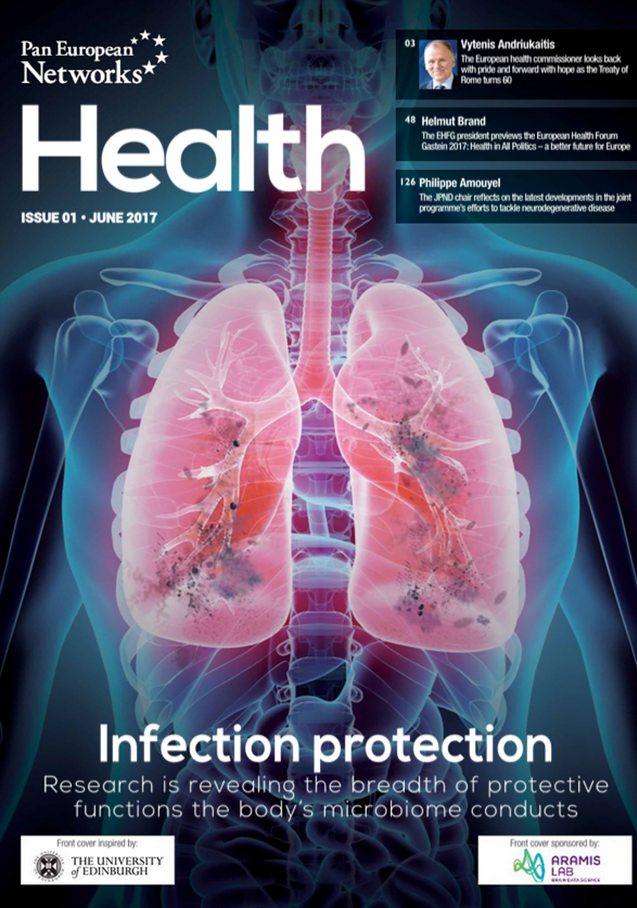
Prof. Philippe Amouyel, Chair of the JPND Management Board, discusses JPND progress and priorities for the future in issue one of Pan European Networks: Health.

In the interview, Prof. Amouyel outlines some of JPND’s major recent and future developments and discusses the ongoing JPND call for research projects for pathway analysis across neurodegenerative diseases.

Click here to read the full article.

The trio of Presidencies of the Council of the European Union 2016-2017 (the Netherlands, Slovakia and Malta) have signed a Joint Statement on Dementia, issued during the meeting of the governmental expert group on dementia in Malta on May 15-16, 2017.

The statement calls on the European Commission and EU Members States to promote and support international cooperation in dementia research and improve the coordination of existing European research programmes such as JPND.

Click here to download the full statement.